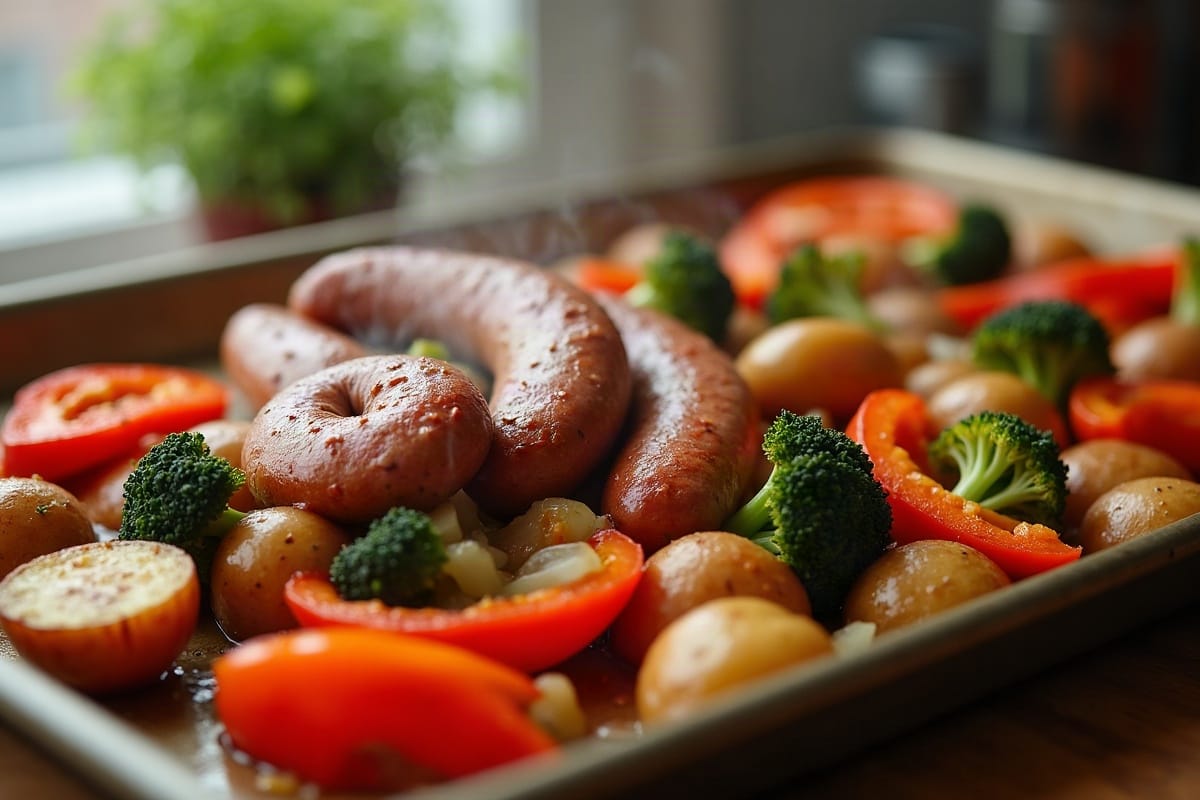
Sheet-pan dinners promise one pan and mostly deliver mush, because everything goes in at once. This one is staged so it can't: three additions, one temperature, and everything finishes together at minute 35.
Potatoes and carrots go in at minute 0, the sausage, onion and peppers at 15, the zucchini at 25. The staging table below is the whole recipe, and the swap table after it works from whatever vegetables are in the drawer.
Why you'll love this
- One pan, one 425°F oven, three timed additions.
- About $2.40 a serving.
- 10 minutes of knife work; the oven does the rest.
- A swap table by hardness, so the drawer decides the vegetables.
- The leftovers crisp into a breakfast hash.
The recipe
Print this page for the card aloneIngredients
Steps
- Heat the oven to 425°F (220°C) with a rimmed half-sheet pan (18 by 13 in) inside. A hot pan starts the potatoes browning on contact instead of steaming.
- Cut everything before anything goes in: potatoes to 1 inch, carrots to ½-inch coins, sausage to 1-inch coins, onion into wedges, peppers to 1 inch, zucchini to ½-inch half-moons. The sizes are what make the timing work, so this is the step that matters.
- Toss the potatoes and carrots with 1½ tbsp of the oil and ¾ tsp of the salt. Spread them cut side down on the hot pan and roast 15 minutes, until the cut sides are starting to color.
- Meanwhile toss the sausage, onion and peppers with 1 tbsp oil, the remaining ¾ tsp salt, the pepper, paprika, oregano and garlic powder.
- At minute 15, pull the pan, push the potatoes and carrots to one side and add the sausage, onion and peppers in a single layer. Roast 10 minutes; the sausage edges should be starting to brown.
- At minute 25, toss the zucchini with the last ½ tbsp oil and a pinch of salt, add it to the pan, and roast the final 10 minutes, until the zucchini is tender but still holds its shape and the sausage is browned all over.
- Check the potatoes: a knife should slide in with no resistance. If it doesn't, give the pan 5 more minutes; the rest of it can take it.
- Splash the vinegar over the hot pan, scatter the parsley, and serve straight from the pan.
The staging table
This is what most sheet-pan sausage recipes leave out. Everything roasts at 425°F, and the only variable is when each thing goes in. Set a timer for the pan, not for the pieces.
| Minute | Goes in | Total time on the pan | Done when |
|---|---|---|---|
| 0 | Potatoes, carrots | 35 min | Knife slides in with no resistance; cut sides browned |
| 15 | Sausage coins, onion wedges, bell peppers | 20 min | Sausage browned at the edges; onion soft, peppers blistered |
| 25 | Zucchini | 10 min | Tender, holding its shape, edges just colored |
| 35 | Nothing, pull the pan | Vinegar on, parsley on, eat |
Timings assume a hot pan, pieces cut to the sizes in the steps, and a single layer.
- More than one layer at minute 15? Split across two pans and swap shelves when the zucchini goes in. A crowded pan steams, and steamed sausage is the whole reason people give up on this dinner.
These timings come from the cut sizes and the oven temperature, not from a timed run in our kitchen; if yours runs differently, tell us and the table gets fixed.
The swap table, by hardness
Pick any mix. The rule is hardness, not vegetable: hard things go in at 0, medium at 15, soft at 25. Keep the cuts at the size listed and the table holds.
| Hardness | Goes in at | Vegetables | Cut |
|---|---|---|---|
| Hard | Minute 0 | Potatoes, sweet potatoes, carrots, parsnips, beets, butternut squash | 1-inch chunks; ½-inch coins for carrots and parsnips |
| Medium | Minute 15 | Onion, bell peppers, broccoli and cauliflower florets, halved Brussels sprouts, halved mushrooms, green beans, fennel wedges | 1-inch pieces; sprouts and mushrooms halved |
| Soft | Minute 25 | Zucchini, summer squash, asparagus, cherry tomatoes (whole), snap peas | ½-inch half-moons; asparagus in 2-inch lengths |
Two swaps that change the clock:
- Raw sausage instead of smoked. Whole raw Italian or bratwurst links go on the pan at minute 0 with the potatoes, get turned at 15, and come off when a thermometer in the thickest link reads 160°F (71°C). Rest them 3 minutes, then slice. Smoked sausage is already cooked, which is why coins of it only need the 20 minutes to brown and heat through.
- Frozen vegetables. Don't thaw. Treat frozen broccoli, green beans or peppers as medium and add them at 15, straight from the bag, spread out so they don't puddle.
Why staging beats dump-and-hope
- A potato chunk needs 35 minutes at 425°F to go creamy inside.
- A zucchini half-moon needs 10.
Put them on the pan together and the choice is raw potatoes or zucchini that has collapsed into water. Most recipes pick a middle number like 25 minutes and call the result "tender", which is a kind word for underdone potatoes next to soft peppers.
Three additions cost you two trips to the oven and nothing else.
The browning the schedule buys
Sausage that spends 35 minutes on a pan next to wet vegetables sits in steam for the first half.
Adding it at 15, once the potatoes have given up their surface moisture, puts it on a drier pan where it browns in the time it has.
Storage and reheating
- Fridge: 4 days in a covered container.
- Reheat on a sheet pan at 400°F for 8 to 10 minutes and the sausage crisps back up; the microwave works but the zucchini goes soft.
- Cold, the sausage and potatoes make a good breakfast hash with a fried egg: chop small, crisp in a dry skillet.
- Freezer: 2 months if you leave the zucchini out; it's the one thing on the pan that doesn't survive thawing.
What to serve with it
Nothing is required; it's a full plate.
- A spoon of whole-grain mustard on the side does more for sausage than any sauce.
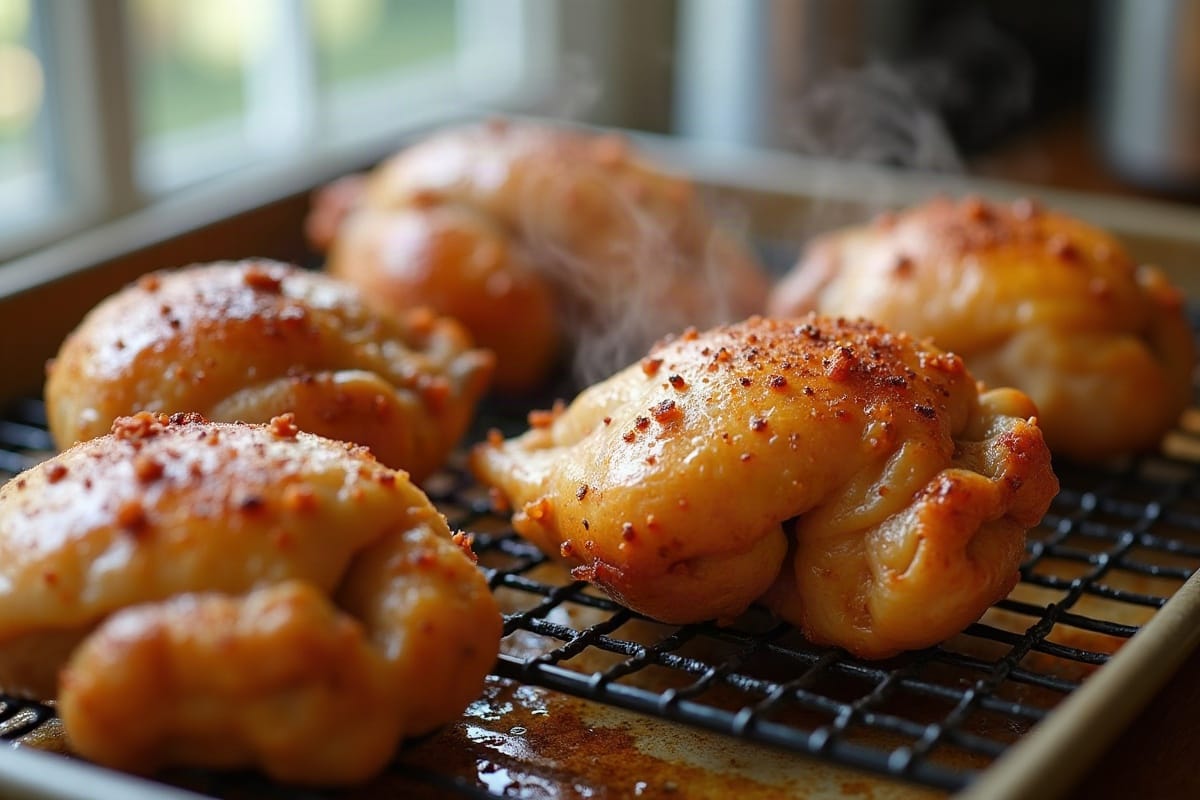
- The pan runs the same clock as our crispy chicken thighs: on a two-pan night the thighs take the upper shelf, this the lower, both at 425°F.
- When the sausage is gone and the vegetables aren't, the leftovers reheat next to garlic butter steak bites on a faster night.
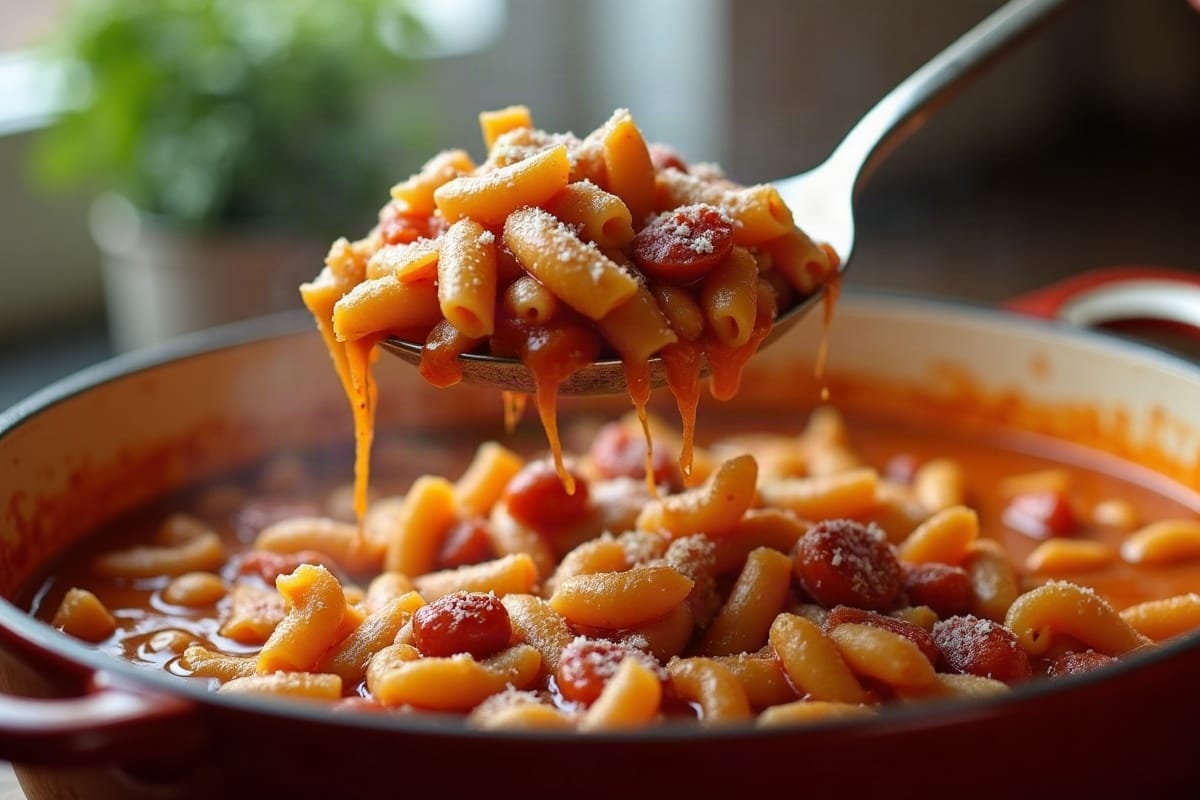
- For a week from one grocery run, this pan is the Tuesday of the easy week, plan #2, with the one-pot pasta e fagioli as the pantry night after it; plan #1 is the three-dinner shape.
This is the pan for the night the calendar double-booked, the fridge drawer that needs emptying, or a Tuesday that should run itself. Set the three timers and walk away.