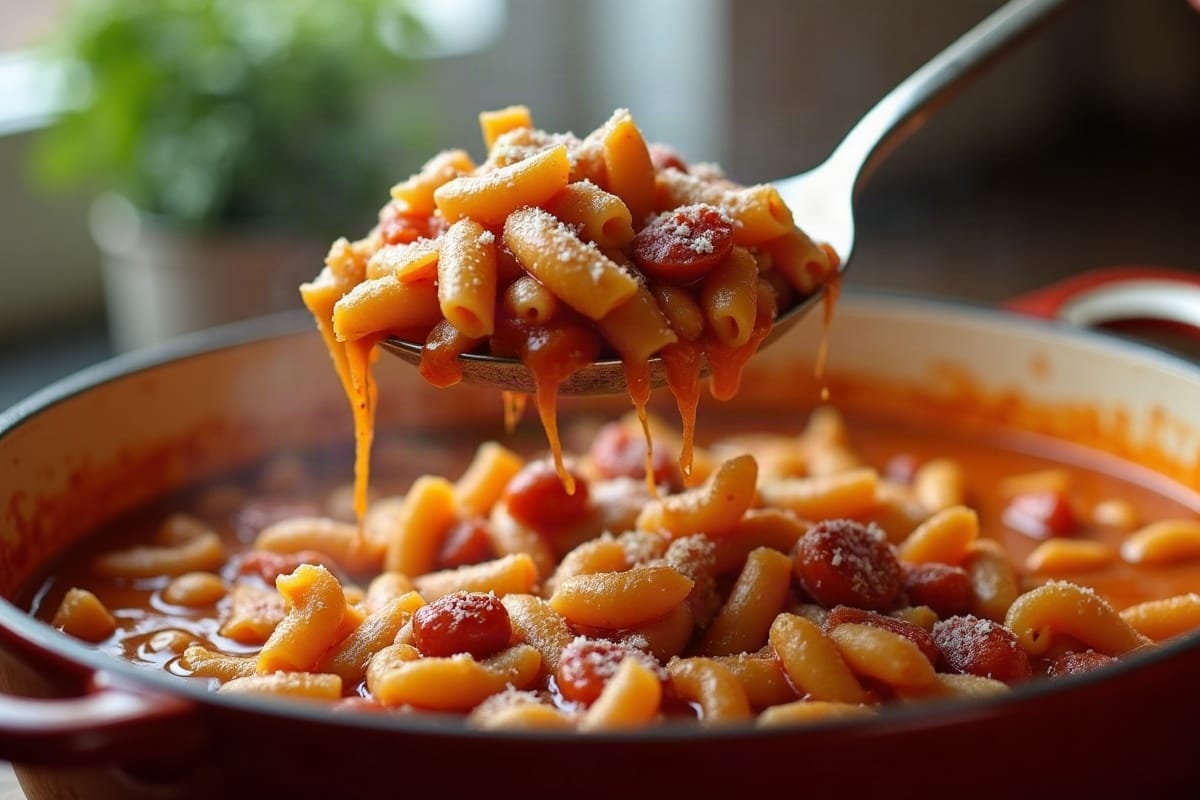
Some weeks end with an empty fridge and a full pantry. Pasta e fagioli is the pot built for exactly that week: two cans of beans, a can of tomatoes, a handful of small pasta, and a soffritto, one pot, 35 minutes.
The only thing to get right is when the pasta goes in, and the timing table below settles that for whatever shape you have.
Why you'll love this
- About $1.40 a serving, and it serves six.
- One pot, 35 minutes, all from the pantry.
- A pasta timing table for whatever shape the shelf holds.
- Vegetarian as written; the pancetta option is one extra step.
- Freezes for 3 months when the pasta cooks separately.
The recipe
Print this page for the card aloneIngredients
Steps
- Heat the oil in a large pot or Dutch oven over medium. Add the onion, carrots and celery with a pinch of the salt and cook 6 to 7 minutes, stirring now and then, until soft and the onion is translucent.
- Add the garlic, rosemary, oregano, pepper flakes and tomato paste. Stir 1 to 2 minutes, until the paste darkens a shade and smells sweet rather than raw.
- Mash 1 cup of the beans with a fork or the back of a spoon; leave the rest whole. The mashed cup thickens the broth without flour or cream.
- Add the crushed tomatoes, broth, water, all the beans, the salt and pepper. Bring to a boil over high, 4 to 5 minutes, then drop to a steady simmer.
- Add the pasta only now, into a pot that is simmering, and stir once so nothing sticks to the bottom. Simmer 9 to 11 minutes for ditalini, 1 minute short of the package time, stirring twice, until a piece bitten in half shows no chalky white center but still pushes back.
- Off the heat. Taste for salt; canned tomatoes vary and it usually needs a pinch more. Rest 2 minutes, which is when the pasta finishes.
- Ladle into bowls with parsley and parmesan on top and a thread of olive oil. Bread on the side is not optional in our house.
The pancetta option. Start with the pancetta in a dry pot over medium, 4 to 5 minutes until the fat has rendered and the pieces are crisp. Pull half out to scatter on top later; cook the soffritto in the remaining fat, with 1 tbsp of oil instead of 2. It adds about 50 cents a serving and the bowl is no longer vegetarian.
The pasta timing table
The two ways this soup fails are opposites:
- Pasta added to liquid that isn't simmering sits and goes chalky: cooked outside, raw at the core.
- Pasta cooked to the full package time, then held in hot soup, keeps cooking and blows out into mush by the second bowl.
The fix is the same for every shape: add it at a real simmer, cook it 1 minute short of the package time, and let the 2-minute rest finish it.
| Shape | Package time | Simmer in the pot | Add at minute (of 25) |
|---|---|---|---|
| Ditalini | 10 to 12 min | 9 to 11 min | 14 |
| Small shells | 9 to 11 min | 8 to 10 min | 15 |
| Elbows | 8 to 10 min | 7 to 9 min | 16 |
| Orzo | 8 to 9 min | 7 to 8 min | 17 |
| Broken spaghetti, 1-inch pieces | 9 to 10 min | 8 to 9 min | 16 |
Read your own box; brands differ by a minute or two, and the rule is the box's number minus 1.
The "add at minute" column counts from the moment the onion hits the oil, so the soup lands at 25 minutes whichever shape you use. These timings come from the method and the package numbers, not from a timed run in our kitchen; when the partner kitchen cooks it, their notes land here.
Leftovers and the second-day rule
Pasta keeps drinking broth in the fridge. Day two, the pot is thicker and closer to a stew, which plenty of people prefer; loosen it with a splash of water or broth as it reheats over medium-low.
If the whole pot is for the week rather than tonight, cook the pasta separately, store it in its own container, and add a scoop to each bowl as you reheat. That one change keeps day four as good as day one.
Swaps that work
- Beans: cannellini are the classic; great northern or navy do the same job; chickpeas hold their shape.
- No crushed tomatoes: a 28 oz can of whole tomatoes, squeezed in your hand into the pot.
- Greens: kale or chard, chopped, goes in with the pasta; spinach goes in off the heat.
- The best free upgrade: a parmesan rind dropped in at step 4 and fished out before serving. Costs nothing if you keep rinds in the freezer.
- Broth: vegetable to chicken is fine for a non-vegetarian pot.
Storage and reheating
- Fridge: 4 days.
- Freezer: 3 months if the pasta was cooked separately, 1 month with pasta in (it survives, softer).
- Reheat on the stove over medium-low with a splash of liquid, or in the microwave in 90-second bursts, stirring between. The soup thickens every time it cools, so the splash is part of the reheat, not optional.
What to serve with it
A slab of bread with olive oil, and that's dinner.
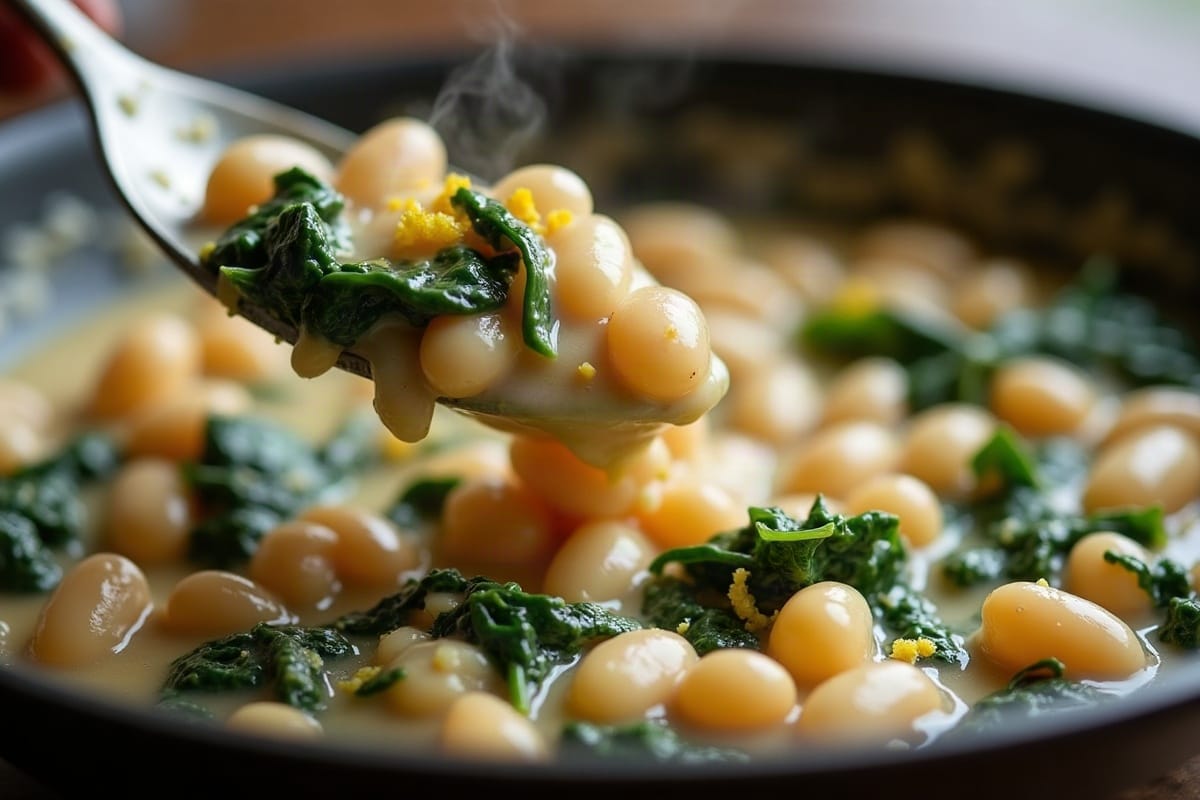
- The pot is the sibling of our creamy white bean and spinach skillet: same two cans, opposite mood. The two cover most weeknights when the fridge is empty.
- For the faster, smokier cousin, the 20-minute black bean and rice skillet runs the same cans-to-dinner play in half the time.
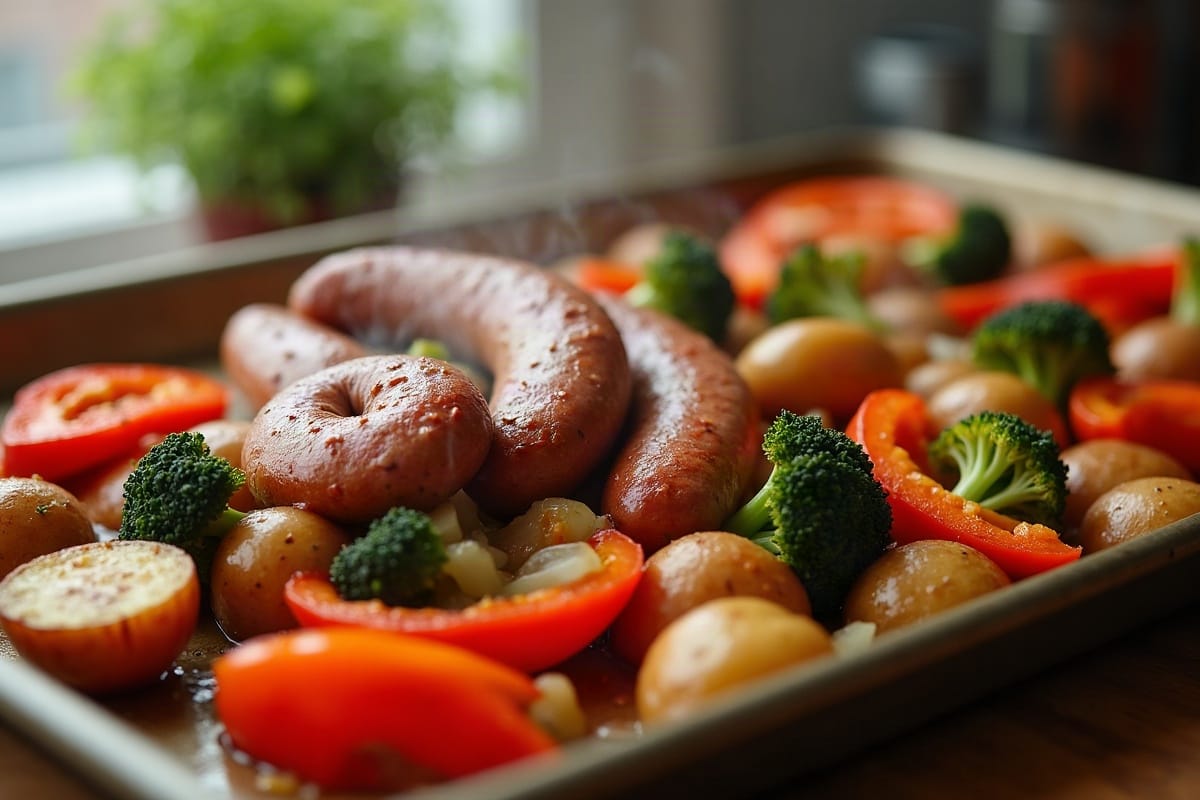
- It follows the sheet-pan sausage and vegetables well in a week: the sausage night uses the fresh vegetables, this one uses the cans.
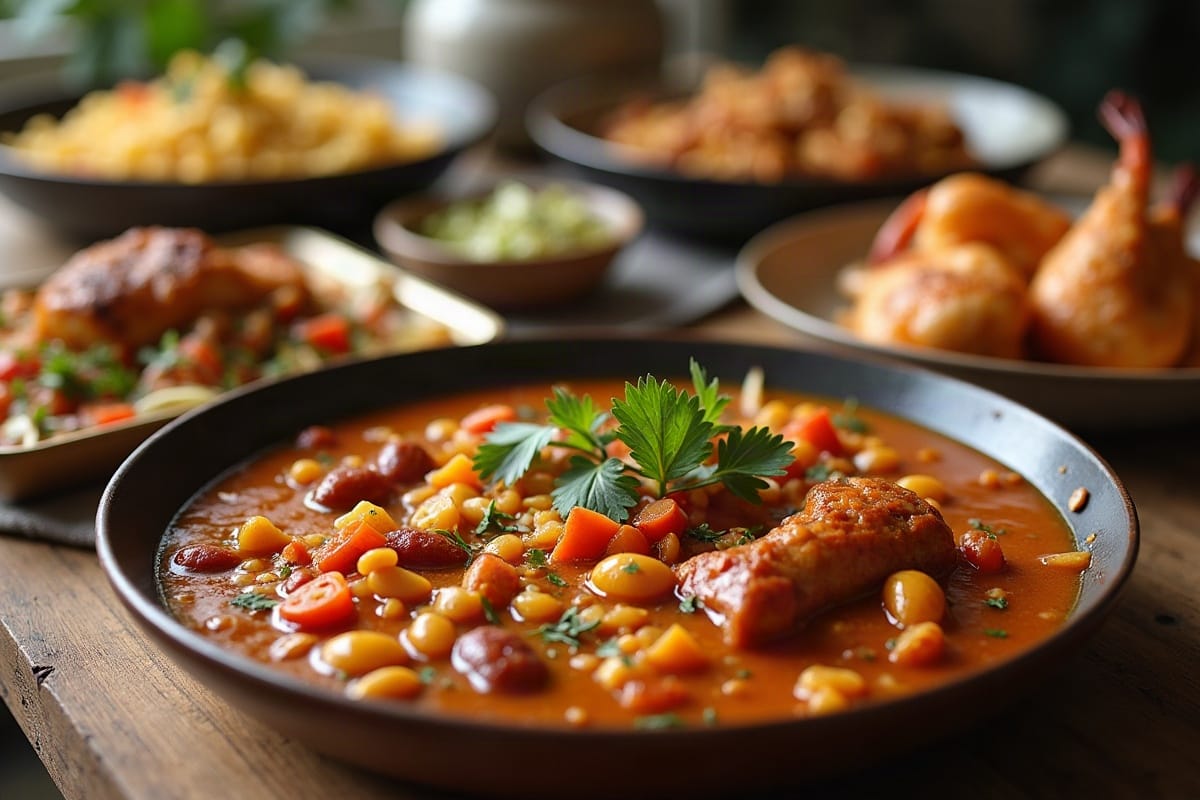
- For a whole week from one run, this pot is the Thursday flex night of the easy week, plan #2, where the Mediterranean lunch meal prep covers the lunches; plan #1 is the three-dinner shape.
Keep it for the Thursday that ran long, the week the budget tightened, or the cold night that wants a ladle instead of a plate. A pot of beans and pasta has fed harder weeks than this one.