Shrimp go from raw to rubber in about a minute, which is the whole reason people order them instead of cooking them. Two rules fix it, and this recipe is built on them:
- Rule one: a hot pan, dry shrimp, one layer, so they sear instead of steaming in their own water.
- Rule two: pull them the moment they turn pink and curl into a loose C. An O is overcooked.
The butter and garlic go in after, over lower heat, and finish the shrimp without burning the garlic. That's 8 minutes of prep, a minute for the pan to heat, and 6 in the pan.
Why you'll love this
- 15 minutes with thawed shrimp, honestly counted.
- The timing table reads the clock straight off your bag's count.
- The pink-and-curled cue replaces thermometer guessing.
- About $3.30 a serving, one skillet.
- A frozen-bag path, timed just as honestly.
The recipe
Print this page for the card aloneIngredients
Steps
- Pat the shrimp dry with paper towels, really dry, and season with the salt and pepper. Wet shrimp steam; dry shrimp sear. Cut the butter, mince the garlic, zest and juice the lemon, chop the parsley, and set it all by the stove. Nothing in this recipe leaves you time to chop once the pan is hot.
- Heat the oil in your largest skillet over high until it shimmers and the first wisp of smoke shows.
- Lay in the shrimp in one layer, flat, not touching. A 12-inch skillet takes 1½ lb in one batch; a 10-inch needs two. Leave them alone for the first-side time in the table (2 minutes for 16/20, 60 seconds for 31/40), until the underside is pink with a little browning at the edges.
- Flip each one and cook the second-side time (90 seconds for 16/20, 30 for 31/40), until pink most of the way through and starting to curl. Move them to a plate. They are not quite done yet; the butter finishes them.
- If the pan needed two batches, repeat with the second half. Two batches are faster than one crowded pan, which steams and ends up gray.
- Lower the heat to medium. Add the butter, garlic and pepper flakes and swirl for 30 seconds, until the butter foams and the garlic smells sweet but has not colored.
- Return all the shrimp and their juices. Toss through the foaming butter for the finish time in the table (2 minutes for 16/20, 60 seconds for 31/40), until every shrimp is opaque and curled into a loose C. If one has closed into an O, it is done and past; pull the pan now.
- Off the heat, add the lemon zest, lemon juice and parsley and toss once. Finish with flaky salt and eat straight away; shrimp keep cooking in a hot pan, so serve from a plate, not the skillet.
The timing table, by count
Shrimp are sold by count per pound, and the count is the only number that matters for timing. A 16/20 shrimp weighs roughly twice what a 31/40 does, so it takes close to twice as long.
Look up your bag, sear on the two side times, then finish in the butter. Times are for one batch in a 12-inch skillet over high heat.
| Count per lb | Called | First side, high heat | Second side | Finish in the butter, medium | Total time in the pan |
|---|---|---|---|---|---|
| 16/20 | Jumbo | 2 min | 90 sec | 2 min | 5½ min |
| 21/25 | Extra-large | 90 sec | 60 sec | 90 sec | 4 min |
| 26/30 | Large | 75 sec | 45 sec | 75 sec | 3¼ min |
| 31/40 | Medium | 60 sec | 30 sec | 60 sec | 2½ min |
How the table maps to the clock
- The 6-minute cook time in the spec strip is the 16/20 path: 2 minutes and 90 seconds on the two sides, 30 seconds for the garlic to foam, 2 minutes back in the butter.
- On 31/40 the same path is 3 minutes, and the risk runs the other way: the second side is a count of thirty, not a wander to the fridge.
- Two batches in a smaller pan add the two side times again: 3½ minutes more for 16/20, 1½ for 31/40.
What the count costs
The ~$3.30 a serving is priced on a 1½ lb bag of 31/40. A 16/20 bag runs about 75 cents more a serving, and the trade is a bigger bite and a longer margin at the C.
Shrimp are too small to thermometer reliably, so the cue is the color and the curl, not a number. These timings come from the method and the count on the bag, not from a timed run in our kitchen; if your pan runs differently, tell us and the table gets fixed.
The pink-and-curled cue
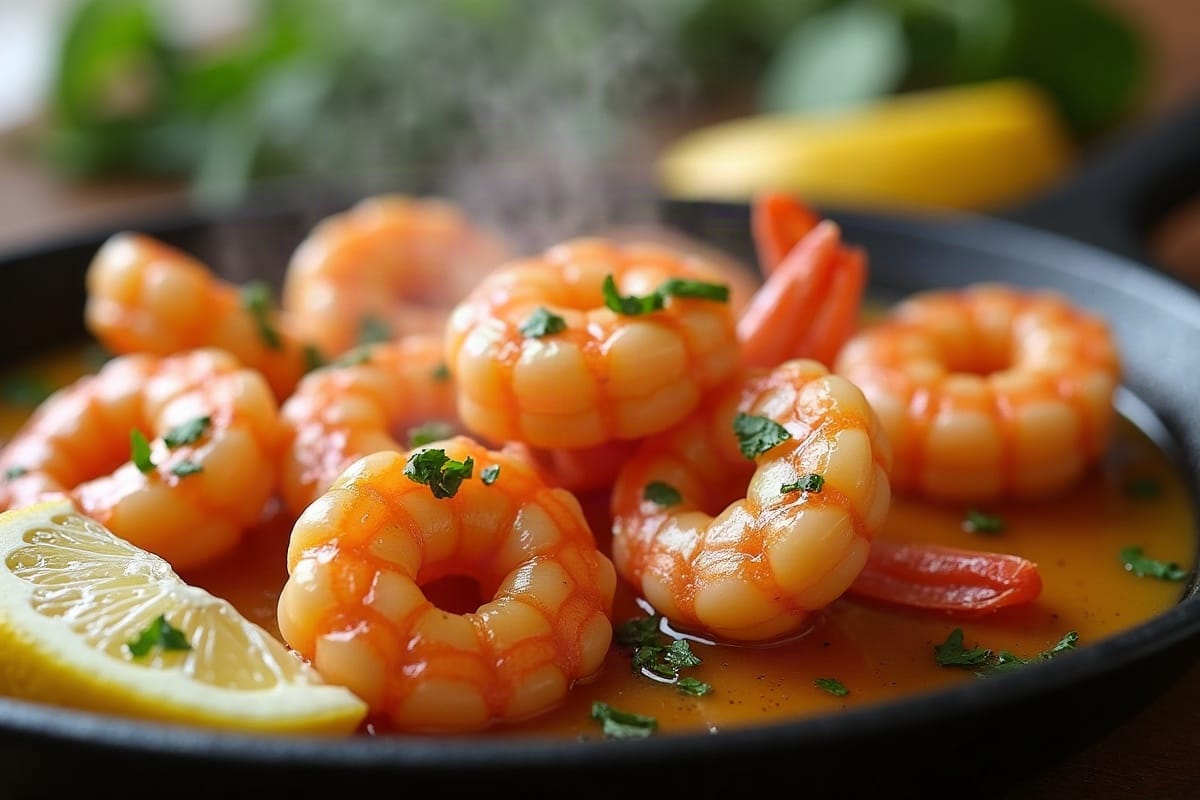
Raw shrimp are gray and translucent and lie straight. As they cook the flesh turns opaque white with pink edges, the shell-side stripes go red-orange, and the body pulls into a curve.
The curve is the doneness gauge:
- Straight or barely bent: raw inside.
- A loose C, the ends apart: done. Opaque all the way through with no gray left in the thickest part. This is where you pull them.
- A tight O, the tail touching the head end: overcooked. The muscle has contracted as far as it can, and it will be springy and dry. Nothing brings it back; the garlic butter hides it, a little.
The table sends the shrimp to a plate after the sear and back into the butter for a reason. The butter step is where the last 20 percent of cooking happens at a lower heat, which is far easier to stop at the C than a screaming-hot pan is.
The frozen-shrimp path, timed honestly
Most shrimp in a US grocery store was frozen on the boat. A bag from the freezer case is often better than the "fresh" tray, which is the same shrimp thawed and sitting, so buy the bag.
What changes is the clock: the 15 minutes in the title assume thawed shrimp, and thawing adds time before the 8 minutes of prep begin.
| Method | Time | Notes |
|---|---|---|
| Overnight in the fridge, in the bag on a plate | 8 to 12 hours | The standard, hands-off way; shrimp keep 1 to 2 days after thawing |
| Sealed bag in a bowl of cold tap water | 15 to 20 minutes for 1½ lb | Change the water once; never warm water |
| Loose in a colander under cold running water | 5 to 8 minutes | Fastest, uses the most water; pat very dry after |
| Straight from frozen into the pan | Do not, for this recipe | They dump water, the pan drops to a simmer, and nothing sears |
So from frozen with the cold-water bowl it is a 35-minute dinner, not a 15-minute one, and still faster than delivery arrives.
Thawed shrimp are wetter than shrimp that never froze, which makes step 1 matter twice as much: two rounds of paper towels, and let them sit on a dry towel while the pan heats.
Swaps that work
- Scallops take the same two rules and a similar clock: dry, high heat, 90 seconds a side untouched, then the butter.
- Ghee or clarified butter can take the full high heat if you'd rather cook garlic and shrimp in one step. Regular butter burns there, which is why the recipe drops to medium first.
- Scampi: half the lemon juice and a splash of white wine in step 6.
- No parsley: chives, or a spoon of chopped fennel fronds.
- Shell-on shrimp taste more of shrimp and take 30 seconds longer per side; peel at the table.
Storage and reheating
- Fridge: 3 days, covered, with the butter left on them. That is the cautious side of the standard 3-to-4-day window for cooked seafood.
- Reheat: 45 seconds in a covered pan over medium-low with a spoon of water. Stop at warm, not hot; a second full cook is what turns leftover shrimp into rubber.
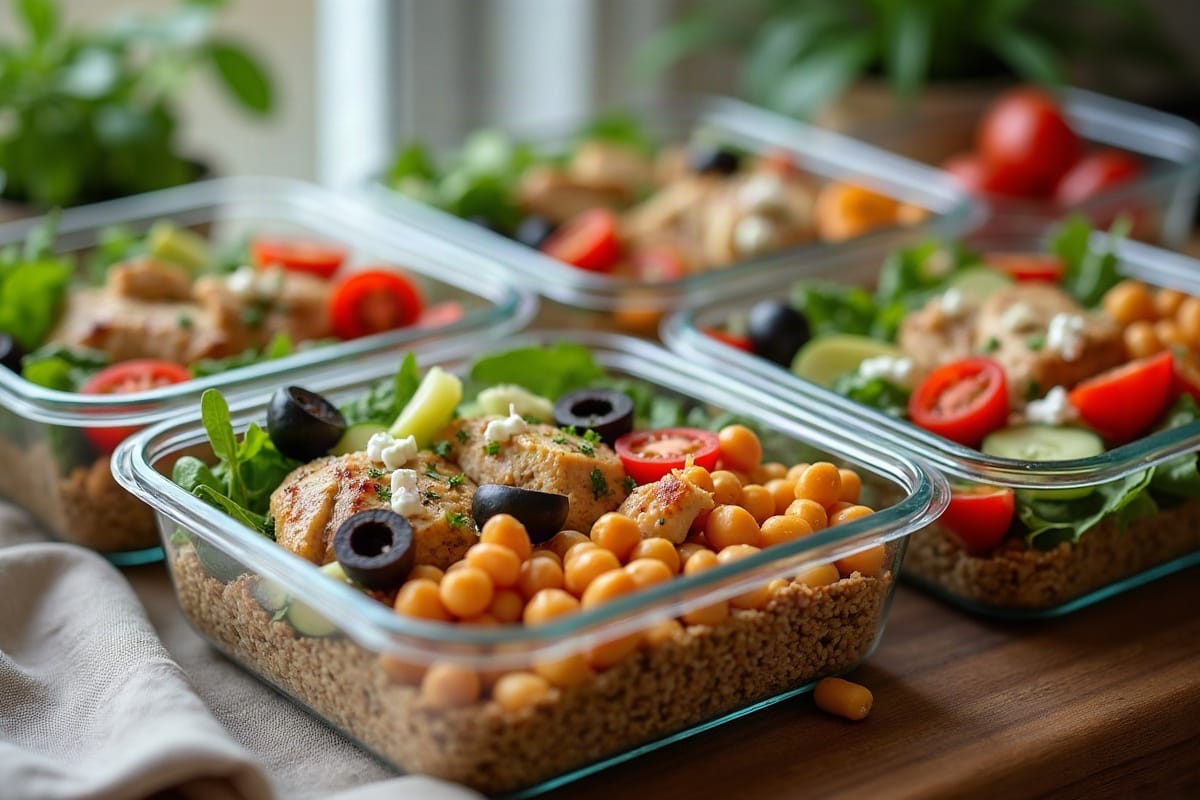
- Cold is the better leftover: fold them into the Tuesday chopped salad from our Mediterranean lunch meal prep in place of the chicken, or eat them from the container with a squeeze of lemon.
- Do not freeze cooked shrimp; they have been frozen once already.
What to serve with it
- On its own: a plate that needs nothing but bread to drag through the butter.
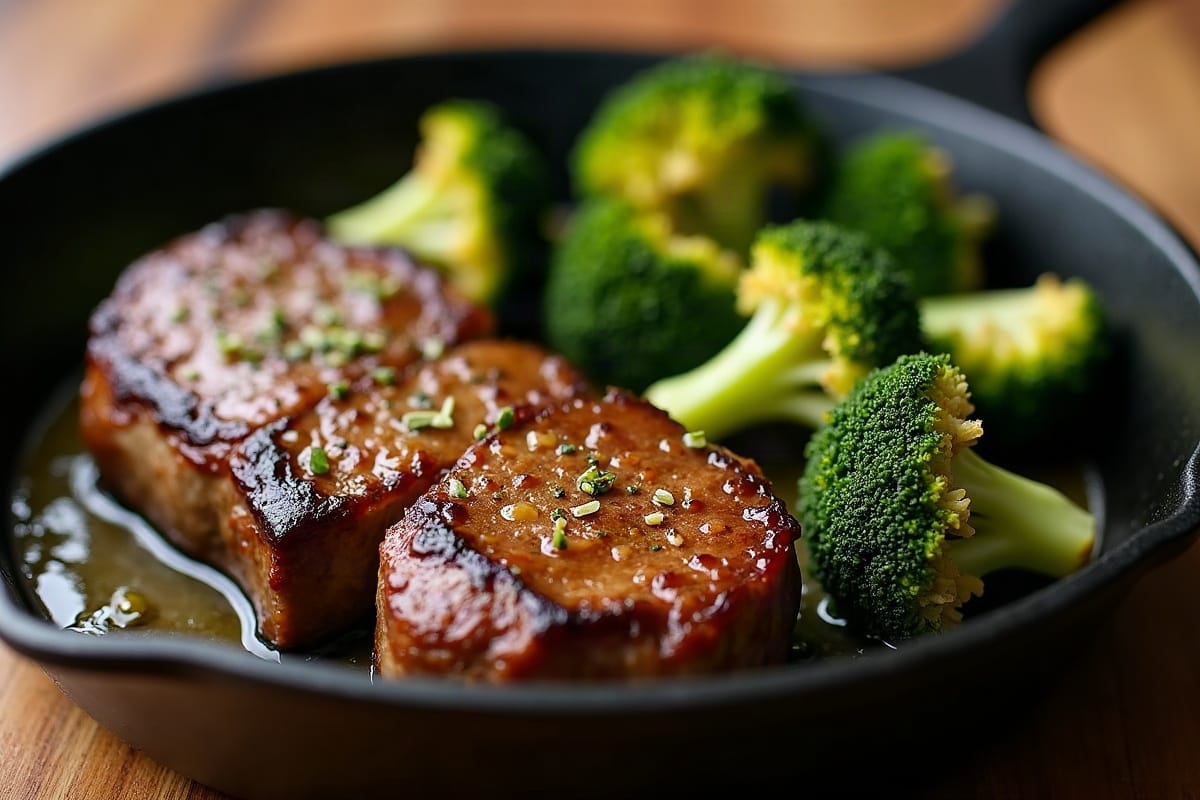
- The charred broccoli from our garlic butter steak bites cooks first in the same pan by the same method, then waits while the shrimp take their six minutes. A skillet of each is a fast dinner for six.
- Rice started before the shrimp is ready when they are.
- 8 oz of spaghetti tossed through the pan with a ladle of its water turns this into a full pasta night.
- On a slower evening, the crispy baked chicken thighs run in the oven while this comes together on the stove; both use the same lemon.
- For the week: plan #1 has a steak-bites night where this swaps straight in at about a dollar less per serving, and it is the Wednesday of the easy week, plan #2, the fast night between the sausage pan and the pantry pot.
This is the dinner for the evening that shrank, the guests who arrived hungry, or the Wednesday that needs a win. Fifteen minutes is allowed to be dinner.